Answer the trainer-plane question before the next club session

RC Aircraft Flight Stabiliser controls and screen

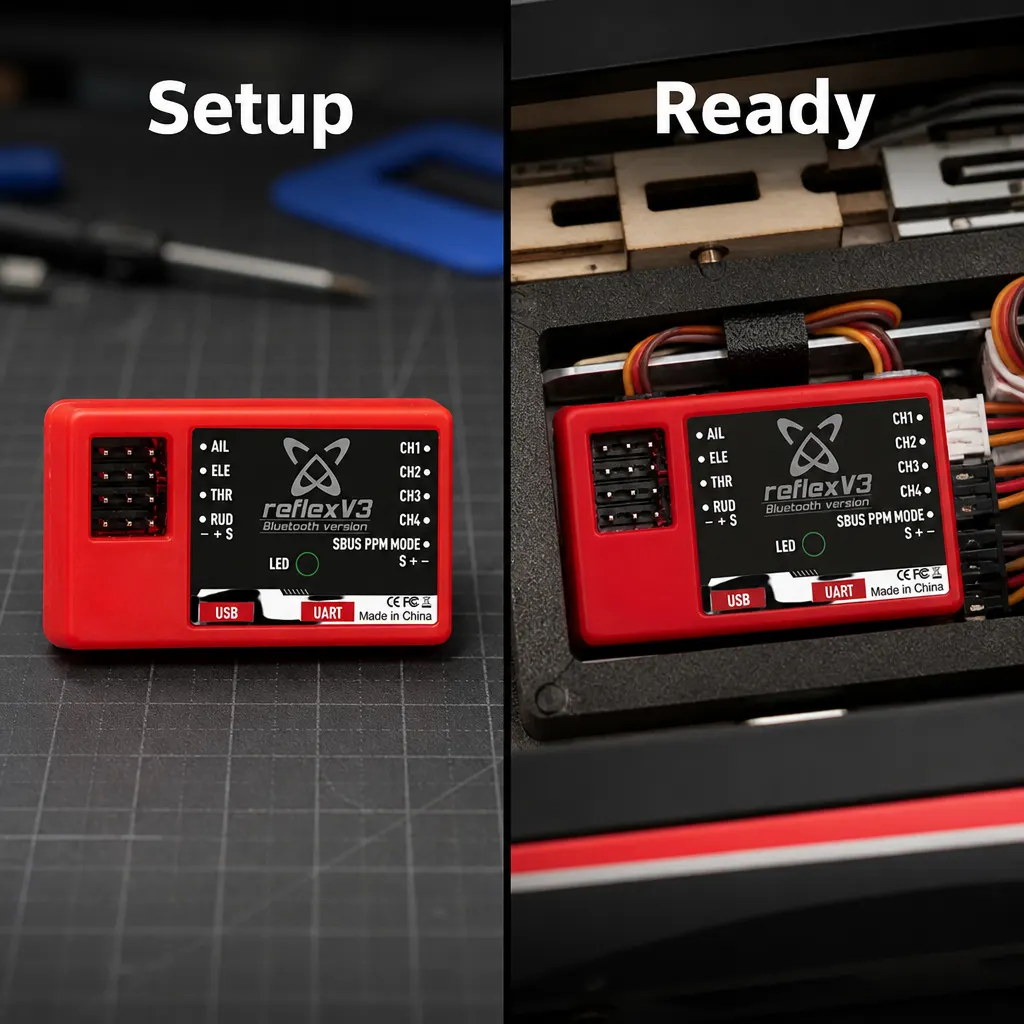
An RC aircraft flight stabiliser for trainer plane use is worth considering when you already have a compatible fixed-wing model and want a calmer platform while you practise take-offs, circuits and approaches. The key point is compatibility: the FMS Reflex V3 RC Aircraft Flight Stabilisation System is listed as a flight stabilisation system for compatible RC aircraft, with this selected configuration supporting Bluetooth and computer connection. It is also listed for use with most FMS aircraft and aircraft from other brands, but the intended model must be checked before purchase.

For a UK beginner, returner or club trainee, that makes the buying decision less about chasing a magic fix and more about whether this specific unit fits the aircraft on your bench. If you are standing in a draughty clubhouse near the patch, listening to mixed advice about gyros and training habits, the sensible route is to treat stabilisation as an aid that may reduce workload, not as a substitute for trimming, instruction or careful flying. The right question is not simply whether stabilisers are good, but whether this stabiliser suits your trainer, receiver layout and confidence level.

Set the job at a UK club bench, not in a generic product list

Picture the job at a club workshop table in Leicestershire, with a foam trainer, a transmitter case, spare leads and a kettle going in the corner. The aircraft is not an abstract category; it is a real model with limited space, a receiver already installed, and control surfaces that must move the right way. A stabiliser only becomes useful if it can be installed cleanly, understood by the pilot, and checked calmly before the model goes anywhere near the flightline.

This matters because trainer aircraft are usually bought to remove pressure from early flying, not to add another confusing layer. A pilot preparing for first solo flights may already be thinking about wind, orientation and landing costs. A returner may remember the feel of older models but be less familiar with modern electronic assistance. A hands-on hobbyist may be comfortable with receivers but still cautious about modes, gain and switch assignment. The article’s job is to keep the decision practical: identify what is documented, identify what is not documented, and avoid treating broad compatibility wording as a promise for every aircraft.

Check the documented Reflex V3 facts against your trainer

The documented product fact is straightforward: the listed item is the FMS Reflex V3 RC Aircraft Flight Stabilisation System with Bluetooth and PC Connection. It is a flight stabilisation system for compatible RC aircraft. The selected configuration supports Bluetooth and computer connection. It is listed for use with most FMS aircraft and aircraft from other brands, with model compatibility to be checked before purchase. Those are useful facts, but they are not the same as a complete installation guarantee for your exact trainer.

Use those facts as boundaries. If your aircraft is an FMS model, the listing language gives you a reason to investigate further, but still not permission to skip the model-specific check. If your trainer is from another brand, the wording says other brands may be in scope, not that every wing layout, receiver arrangement or control setup is automatically covered. If you need Bluetooth or computer connection for setup convenience, this selected configuration includes that capability, but the facts do not say which exact device, operating system or setup workflow your own bench will require.

Avoid the common mismatch between stabilisation and autopilot expectations

A stabiliser should not be treated as a complete autopilot. The documented facts describe a flight stabilisation system, not a self-flying trainer, not a simulator, and not a promise that a poor setup will become safe. That distinction is important for a learner at a UK club, because the most useful support often comes from slowing down decisions, checking surfaces, and flying within suitable conditions. If a buyer expects a device to remove the need for instruction, orientation practice or trimming, the expectation is already out of line with the available facts.

There is also a social mismatch to handle. Some club pilots are wary of electronic assistance because they worry beginners will miss core handling skills. Others see stabilisation as a reasonable aid when used carefully. The balanced view is to keep manual learning in the plan. If your trainer can be flown with assistance managed sensibly, you can still practise the habits that matter: smooth inputs, safe height, planned approaches and calm recovery. If the equipment setup is confusing or the model compatibility is unclear, the more responsible choice is to pause rather than force the purchase.

Use this packing-bench checklist before committing

Start with the aircraft name and version, not just the phrase trainer plane. Check whether the intended model is compatible with the Reflex V3 configuration you are considering. Then check the receiver arrangement, available channels and the control surfaces you need to preserve. If your trainer uses a simple layout, the decision may be easier to investigate. If it has independent ailerons, flaps, a compact receiver bay or limited spare channels, treat that as a reason to slow down and confirm the setup path before buying.

A practical checklist is: confirm the exact aircraft model; confirm whether it is an FMS aircraft or another brand; check that the listing or support material covers your intended aircraft; note whether Bluetooth or PC connection is relevant to how you prefer to configure devices; check that the stabiliser can physically sit in the model without awkward wiring; plan a pre-flight control-surface direction check; and decide who at the club can look over the installation before the first flight. None of these checks require guessing performance claims. They simply turn the documented facts into a buyer-safe decision.

Know who should hold off or ask for club help first

This product is not the right next step for every learner. If you do not yet know the exact model aircraft you will use, wait until that is settled. If you cannot identify your receiver arrangement or available channels, ask an instructor or experienced club member to help you map the setup before purchase. If you are hoping the stabiliser will compensate for flying in unsuitable conditions, it is better to reduce the risk by choosing calmer weather, using buddy-box instruction where available, or spending more time on basic setup.

Experienced pilots can also be a mismatch if they want a model to feel completely untouched by electronic assistance. Stabilisation may not fit the way every pilot wants a trainer, sport model or scale aircraft to respond. The documented facts do not promise a particular flying feel, wind result or recovery outcome. For a valued model, especially one being prepared for a maiden flight, the cautious path is to decide whether you want switchable assistance in principle, then verify whether this Reflex V3 configuration suits the exact aircraft rather than buying from the name alone.

Compare the decision paths for beginner, returner and upgrader

A beginner at a club field usually needs clarity and confidence more than extra functions. Their question is: will this stabiliser fit my trainer, and can someone help me check it before flight? A returner may be more focused on rebuilding confidence after time away, so their decision should centre on whether stabilisation supports practice without hiding poor trim or rushed approaches. A hands-on upgrader may care most about receiver channels, wiring neatness and whether Bluetooth or PC connection makes setup more convenient for their bench routine.

These paths lead to the same grounded buying rule. Do not buy because the phrase sounds suitable for all trainer planes; buy only when the documented compatibility wording matches the aircraft you intend to use closely enough to verify. For an FMS trainer, that may mean checking the exact model against Reflex V3 guidance. For another brand, it means treating the broad listing as a starting point, not an answer. For any aircraft, the final comparison is between the stabiliser’s documented role and your real job: calmer practice, cleaner setup, and a model you can still understand if something does not behave as expected.

Take the next step without overbuying or overclaiming

The most useful next step is to write down the exact trainer aircraft, receiver, wing layout and the reason you want stabilisation. Keep the reason plain: first solo confidence, returner nerves, a lighter model that feels busy in typical UK conditions, or a cautious setup for a model you value. Then compare that note with the documented Reflex V3 facts: compatible RC aircraft, Bluetooth and computer connection in this selected configuration, listed use with most FMS aircraft and aircraft from other brands, and the need to check compatibility before purchase.

If those points line up, the product page can become part of a sensible shortlist. If they do not, the mismatch is useful information rather than a failure. A good purchase decision in this category is not the fastest one; it is the one that leaves you with a stabilisation aid you understand, an aircraft that remains predictable, and a setup your club helper can inspect without guesswork. For a trainer plane, that is the practical route: compatibility first, conservative expectations second, and flying skills still at the centre of the plan.