
Short answer: A model aircraft gyro may be part of a windy-landing setup, but the word gyro does not prove that a particular unit will make every landing easier. The Rcstabiliser page lists the Reflex V3 as a flight stabilisation system for compatible RC aircraft and says the listed configuration is for most FMS aircraft and aircraft from other brands. It also tells buyers to check model compatibility before purchase. The page does not specify a wind limit, gain range, receiver protocol, installation method or measured flight result. UK pilots should confirm the aircraft fit, follow the CAA rules and treat the stabiliser as one part of a supervised, documented setup.
Treat windy landings as a setup question
Wind changes the flying task, but a search phrase about windy landings is not evidence of a product wind rating. The current page identifies the Reflex V3 as a flight stabilisation system and gives a broad compatibility description. It does not show a tested wind limit or promise a particular landing result.
Start with the aircraft, radio equipment and intended flying site. Record the exact model and any receiver or control-system details that matter, then compare them with the product instructions or a written compatibility answer. Do not infer fit from the aircraft brand alone.
| Question | What the listing states | What must still be checked |
|---|---|---|
| Product type | Reflex V3 flight stabilisation system | Exact installation and operating instructions |
| Aircraft scope | Most FMS aircraft and aircraft from other brands | The exact model and airframe configuration |
| Wind use | No wind rating stated | Pilot judgement, site conditions and local club rules |
| Control setup | No receiver or protocol list stated | Radio, receiver and channel requirements |
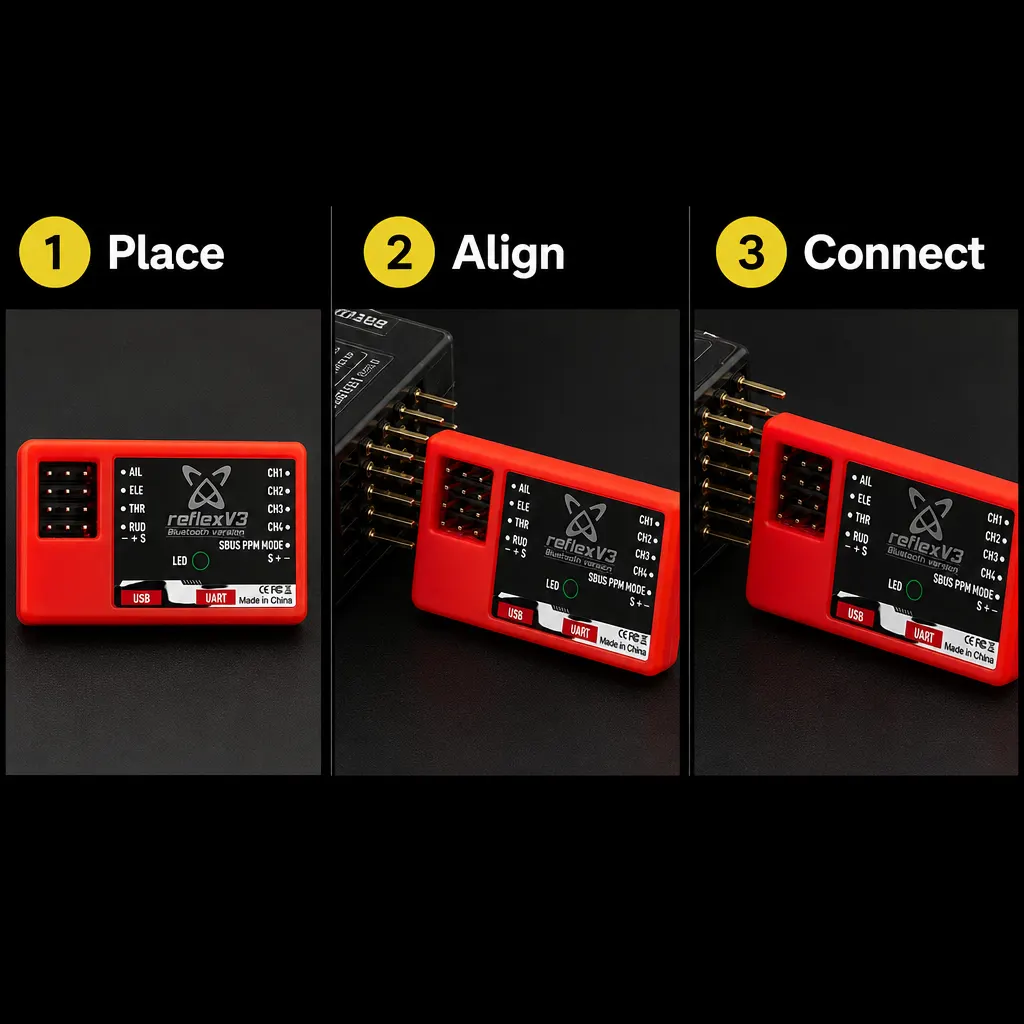
Check compatibility before fitting anything
Compatibility is the first practical buying filter. The product page says to check model compatibility before purchase, so use the exact aircraft name rather than a broad family label. Ask about the receiver, power arrangement, mounting orientation and any control-surface connections only when the manufacturer or seller supplies those details.
Manufacturer does not specify a universal aircraft list, receiver protocol, sensor orientation, gain adjustment or installation procedure on the current page. Keep those as open questions. A physical fit or a similar-looking connector is not proof that the system is suitable.
- Write down the exact aircraft model, version and receiver already installed.
- Compare those details with the current product instructions or a written compatibility response.
- Confirm the required connections, orientation and power arrangement before ordering.
- Complete any bench or range checks only as described by the product documentation.
- Use a supervised, conservative test flight and stop if the model responds unexpectedly.
Keep UK flying safety separate from product claims
The CAA's Drone and Model Aircraft Code says operators are responsible for safe and legal flying, and its model-aircraft guidance covers the relevant UK rules. A flight stabiliser is not an exemption from those requirements and cannot establish that a particular site, model or pilot is suitable.
For outdoor flying, check whether the aircraft and operation require a Flyer ID or Operator ID, then follow the current CAA guidance and any club or association procedures. The CAA's model-aircraft guidance also matters when the model is used for sport or recreation.
Limits before buying for windy conditions
Manufacturer does not specify a wind limit, landing-performance improvement, aircraft weight range, speed range, battery arrangement, calibration method or service life on the current product page. Those gaps matter more than a generic claim that a gyro helps in wind.
Buy only when the exact airframe and radio setup have been confirmed and the intended use fits the documentation. If the decision depends on a published wind rating or a guaranteed landing result, the current page does not provide that evidence.
Related guides and product details
For a model aircraft gyro aimed at windy landings, verify the airframe and radio fit first, then fly within the CAA rules and the limits the documentation actually states. Read RC Aircraft Flight Stabiliser for a Trainer Plane for related guidance. Read RC Plane Stabiliser for Beginners in the UK for related guidance. Review the documented specification on the Reflex V3 flight stabilisation system for compatible RC aircraft product page before ordering.
Sources and safety context
- Supports the Reflex V3 product description, broad compatibility wording and instruction to check model compatibility. Current Rcstabiliser product page.
- Supports the UK safety and legal responsibilities for drone and model aircraft operators. The Drone and Model Aircraft Code.
- Supports the CAA guidance context for recreational and sporting model aircraft flying. CAP 658: Model Aircraft: A Guide to Safe Flying.